Daily Life
Fitness and Gyms in China for Foreigners: Memberships, Classes, and Sports Venues
A practical English guide to finding gyms, fitness classes, running routes, sports venues, and membership options in China as a foreign resident.
Rules and procedures can change. Check the linked official sources before acting on time-sensitive information.
Quick answer
What you need to know
Foreign residents in China can build a reliable fitness routine through commercial gyms, boutique studios, compound facilities, public parks, running tracks, swimming pools, and sports venues. The safest approach is to test the location first, read membership and refund terms, keep payment records, and choose a routine that fits your commute and daily schedule.
- Start with location and schedule before comparing equipment or brand names.
- Use a trial visit or short package before paying for a long gym membership.
- Check contract length, refund rules, transfer rules, personal-training fees, and closure terms.
- Public parks, school tracks, sports centers, and apartment-compound gyms can be practical alternatives.
- Keep receipts, app records, access-card records, and written messages about membership terms.
Finding a fitness routine in China is usually easy. Keeping that routine after the first month is the harder part. Work schedules, commute time, seasonal weather, language barriers, and membership sales pressure can all affect whether a gym actually becomes useful.
This guide is written for foreign residents who want a practical way to stay active in China. It covers gyms, studios, public venues, memberships, payments, trial visits, and the checks to make before paying for a long package.
1. Choose by routine, not only by equipment
The best gym is often the one you will actually use. Before comparing brands or machines, decide when you can realistically train:
- before work;
- during lunch;
- after work;
- on weekends;
- near home; or
- near the office.
If the gym is inconvenient by metro, taxi, bike, or walking route, it may not matter how good the equipment looks. Use Public Transport in China for Foreigners to test the real door-to-door journey before buying a membership.
2. Understand the common fitness options
Foreign residents in China usually have several choices:
- commercial gyms with cardio machines, weights, lockers, and group classes;
- boutique studios for yoga, pilates, boxing, spinning, dance, or strength training;
- personal-training gyms with small-group or one-to-one coaching;
- apartment-compound gyms;
- public sports centers;
- swimming pools;
- running tracks and parks; and
- informal sports groups for football, basketball, badminton, tennis, cycling, or hiking.
Commercial gyms are useful for predictable equipment and flexible hours. Boutique studios can be easier if you prefer structured classes. Public parks and sports centers are often enough if your routine is running, walking, bodyweight training, swimming, or ball sports.
3. Do a trial visit before joining
Do not judge a gym only from a sales tour. Visit during the exact time you plan to train. A gym that feels empty at 2 p.m. can be crowded after work.
During the trial visit, check:
- crowd level at your preferred time;
- cleanliness of locker rooms and showers;
- air conditioning and ventilation;
- equipment condition;
- free-weight availability;
- whether classes require booking;
- whether lockers are day-use or long-term;
- staff communication style;
- towel, water, and shower policies; and
- phone signal or Wi-Fi if you need translation or app access.
If you do not speak Chinese, save key phrases for membership length, refund, cancellation, transfer, and personal training before the sales conversation.
4. Read membership terms before paying
Gym memberships in China can be monthly, quarterly, annual, multi-year, class-card based, or app-package based. The cheapest daily price is not always the best deal if the contract is hard to cancel.
Before paying, confirm:
| Item | What to check |
|---|---|
| Length | monthly, annual, multi-year, or fixed class count |
| Refund | whether unused time or classes can be refunded |
| Transfer | whether you can transfer the membership to another person |
| Freeze | whether travel, illness, or work trips can pause the membership |
| Branch access | whether other locations are included |
| Closure | what happens if the branch closes or changes ownership |
| Training | whether personal training is optional or bundled |
| Receipts | whether you can receive a formal invoice or receipt |
Keep a screenshot or photo of the terms. If a salesperson promises a special condition, ask for it in writing before paying.
5. Be careful with personal-training packages
Personal training can be useful, especially if you need help with technique or structure. It can also become expensive quickly.
Before buying a package, ask:
- how many sessions are included;
- how long each session lasts;
- whether the trainer can be changed;
- whether unused sessions expire;
- whether sessions can be paused;
- whether the plan includes nutrition advice or only training;
- whether the trainer has experience with your goals or injuries; and
- whether the package is refundable or transferable.
If you are unsure, buy the smallest package first. A short package gives you more information than a long sales conversation.
6. Use public parks and sports venues
China’s public parks and neighborhood facilities can be very useful for long-term fitness. Many cities have running paths, outdoor exercise equipment, basketball courts, badminton courts, table-tennis tables, football fields, swimming pools, and public sports centers.
Check rules before you go. Some venues need advance booking, local apps, ID information, swimming caps, indoor shoes, or separate locker-room payment. Opening hours can also change by season, school schedule, or event use.
Public options are especially useful when:
- you do not want a long gym contract;
- you moved recently and are still choosing a neighborhood;
- you prefer running, walking, or bodyweight training;
- your apartment compound has limited facilities; or
- you want a weekend activity with friends or family.
7. Plan around weather and air quality
Outdoor workouts can be pleasant, but weather matters. Summer heat, humidity, heavy rain, winter cold, and poor air-quality days can all change your routine.
Build a backup plan:
- indoor gym or studio for bad weather;
- short home workout for busy days;
- mall walking or indoor sports center during rain;
- swimming or low-impact training during hot weather; and
- earlier morning or later evening sessions in summer.
The goal is not a perfect routine. The goal is a routine that survives normal life in China.
8. Bring the right basics
For most gyms and sports venues, prepare:
- mobile payment and a backup payment method;
- phone number linked to booking or entry apps;
- towel if not provided;
- water bottle;
- lock if lockers require one;
- indoor shoes for some courts or studios;
- swimming cap and goggles for pools;
- translation app for signs or staff questions; and
- passport photo or identity details if a venue requires registration.
Mobile Payments in China for Foreigners explains payment backups that help when a venue does not accept your preferred card or wallet.
9. Watch common risk points
Be cautious if a gym or studio:
- pushes a multi-year membership before you have trained there;
- refuses to explain refund or transfer rules;
- makes promises only verbally;
- charges extra fees after payment;
- has unclear personal-training pricing;
- keeps changing staff or ownership;
- has poor equipment maintenance; or
- requires large upfront payment for a venue you have not tested.
You do not need the perfect gym on day one. A reliable short-term routine is better than a long contract that you stop using.
Practical checklist
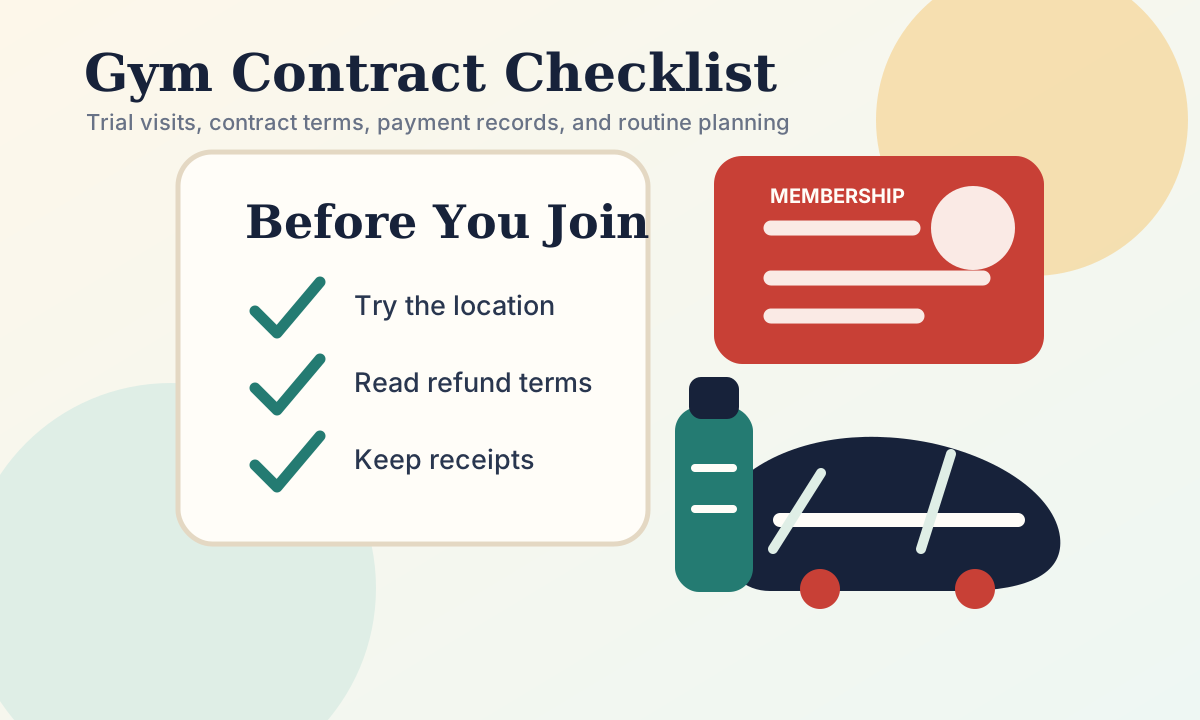
- I tested the gym or venue at my real training time.
- I checked commute, crowding, equipment, lockers, showers, and class booking.
- I understand membership length, refund, freeze, transfer, and branch-access terms.
- I kept receipts, screenshots, and written promises.
- I avoided a long personal-training package until after a trial.
- I know one outdoor or public-venue backup option.
- I have payment, towel, water, and booking app access ready.
- I chose a routine that fits my work and commute schedule.
Official sources
- State Council: A Guide to Working and Living in China as Business Expatriates
- Ministry of Commerce: Guide for Business Expatriates
Frequently asked questions
Common questions
Can foreigners join gyms in China?
Yes. Foreign residents can usually join commercial gyms, boutique studios, sports clubs, and community facilities. Requirements vary by venue, but you may need a phone number, payment method, and sometimes identity information.
Should I buy a long gym membership in China?
Avoid buying a long membership before testing the location, commute, crowd level, equipment, locker rooms, and contract terms. A trial visit or short package is usually safer.
How do gym payments work in China?
Many gyms and studios accept mobile payments, app-based packages, bank cards, or transfer payments. Keep receipts and screenshots, especially for annual memberships or personal-training packages.
Are there alternatives to gyms in China?
Yes. Foreign residents can use public parks, running tracks, swimming pools, sports centers, apartment-compound gyms, hiking routes, cycling paths, and group fitness classes.
What should I check before signing a gym contract?
Check membership length, refund rules, transfer rules, freeze policy, personal-training charges, opening hours, branch access, closure terms, and what happens if you move apartments or change jobs.