Daily Life
Moving Apartments in China: Address, Utilities, Deposit, and Registration Checklist
A practical English guide for foreign residents moving apartments in China, including lease handover, address updates, utilities, deposits, deliveries, and post-move registration checks.
Rules and procedures can change. Check the linked official sources before acting on time-sensitive information.
Quick answer
What you need to know
Foreign residents moving apartments in China should plan the move as an address-change project, not only a moving-day task. Confirm the new lease, document the old apartment, settle utilities, protect the rental deposit, update delivery and banking addresses, and ask locally how to complete any required residence or accommodation registration after moving.
- Treat a China apartment move as a checklist across lease, utilities, address records, deliveries, and registration.
- Photograph the old apartment, meter readings, keys, appliances, and handover condition before leaving.
- Confirm how water, electricity, gas, internet, property-management fees, and deposits will be settled.
- Update addresses in delivery apps, banks, employer records, insurance, schools, and any recurring services.
- Ask the landlord, employer, property manager, or local police station how post-move accommodation or residence registration applies to your new address.
Moving apartments in China is not only about hiring a van and carrying boxes. For foreign residents, the bigger risk is usually administrative: old delivery addresses, unsettled utilities, unclear deposit deductions, missing handover records, or confusion about post-move registration.
Use this guide as a practical checklist. It is written for foreign professionals and families who already live in China and are moving from one apartment to another. Local procedures vary by city and district, so confirm time-sensitive requirements with your landlord, employer, property manager, or local authorities.
1. Start with a move timeline
Begin with four dates:
- the last day of the old lease;
- the first day you can enter the new apartment;
- the moving day; and
- the date when work, school, or family routines must be normal again.
Try to leave at least a small overlap between the old and new apartments. An overlap gives you time to clean, photograph, test appliances, receive deliveries, and handle utility issues without doing everything in one day.
If you are still choosing a new home, review Renting an Apartment in Shanghai or Renting an Apartment in Shenzhen for lease and inspection points before signing.
2. Confirm the new lease before paying movers
Before you book movers or pay a large moving deposit, make sure the new apartment is actually ready.
Check:
- the written lease is signed by the right parties;
- the apartment address is exact, including building and room number;
- the move-in date and key handover are confirmed;
- repairs promised by the landlord are written down;
- internet, gas, water, electricity, and property-management fees are understood;
- furniture and appliance lists are attached if relevant; and
- the payment account matches the landlord or rental company records.
Do not rely only on chat messages for important promises. Put move-in repairs, cleaning, missing furniture, and fee responsibilities into the lease, a handover document, or a written addendum.
3. Document the old apartment before move-out
Rental deposit disputes often come from missing evidence. Before the movers arrive, photograph or record:
- every room from several angles;
- walls, floors, windows, doors, and locks;
- furniture and appliances;
- existing damage from move-in records;
- water, electricity, and gas meter readings;
- internet equipment and router condition;
- keys, access cards, and parking cards; and
- cleaning condition after your items are removed.
Keep the move-in photos, move-out photos, lease, payment receipts, repair chat records, and handover form in one folder. If there is a disagreement later, a clean evidence trail is more useful than a long explanation.
4. Settle utilities and property fees clearly
Before returning keys, ask the landlord or property manager how final fees will be calculated. Water, electricity, gas, property-management fees, parking, internet, and repairs may be handled by different systems.
Create a small settlement table:
| Item | Final reading or period | Who pays | Proof kept |
|---|---|---|---|
| Water | meter photo or bill period | tenant or landlord | photo, receipt |
| Electricity | meter photo or app bill | tenant or landlord | screenshot, receipt |
| Gas | meter photo or inspection | tenant or landlord | photo, receipt |
| Internet | cancellation or transfer | tenant or landlord | account record |
| Property fee | final month or quarter | tenant or landlord | receipt |
If your old apartment used prepaid utilities, confirm whether unused balances are refundable, transferred, or simply part of the handover. For more detail, use Utilities in China for Foreign Renters as a companion checklist.
5. Protect the rental deposit
A good deposit return process has three parts: inspection, written deductions, and payment record.
At the handover:
- inspect the apartment with the landlord or agent;
- compare condition against move-in records;
- agree on any deductions in writing;
- record returned keys and access cards;
- confirm the refund amount and deadline; and
- keep the transfer receipt after the deposit is returned.
Avoid vague statements such as “we will check later” if the apartment is already empty and the landlord has the keys. If delayed inspection is unavoidable, send your photo set and request written confirmation of the handover condition.
6. Update your address records
After moving, update addresses in the systems that affect daily life. Do this before ordering anything expensive.
Common places to update:
- parcel delivery apps;
- food delivery apps;
- grocery delivery services;
- ride-hailing saved addresses;
- bank records where relevant;
- employer HR and payroll records;
- insurance records;
- school, childcare, or family-service contacts;
- hospital or clinic profiles;
- telecom and home-internet accounts; and
- any official-mail or document delivery address.
Packages and Food Delivery in China explains how to format a Chinese delivery address and avoid sending packages to the old building.
7. Ask about post-move registration
Foreign residents should pay attention to accommodation or residence registration after changing addresses. Hotels normally handle registration for hotel stays, but private rental addresses can require a separate local process.
The practical rule is simple: do not assume your old address record automatically covers the new apartment. Ask the new landlord, property manager, employer, or local police station what applies to your address and what documents are needed.
Commonly requested documents can include your passport, lease, landlord information, property address, and previous registration record, but local practice can vary. Keep a copy or screenshot of any completed record.
8. Move your internet and household setup
Home internet can be slower to move than furniture. Before moving day, ask the internet provider whether your old plan can be transferred to the new address. Building coverage can differ even within the same district.
Check:
- whether the same provider serves the new building;
- whether an installer needs property-management access;
- whether the old router, modem, or TV box must be returned;
- whether there are cancellation fees; and
- whether the new apartment already has an active line.
Use Home Internet in China for Foreigners to plan the transfer or new installation.
9. Make moving day easier
Moving day is smoother when you prepare the building logistics, not only the boxes.
Confirm:
- elevator reservation or service-elevator rules;
- loading area access;
- parking or gate access for the moving vehicle;
- whether the property manager needs advance notice;
- old and new building contacts;
- fragile items and valuables packed separately;
- passport, lease, keys, cards, and work documents kept with you; and
- a backup payment method for movers or small purchases.
If the movers charge by distance, stairs, large items, or waiting time, confirm the fee structure before the truck arrives.
10. First 48 hours in the new apartment
After move-in, handle the tasks that prevent repeated problems:
- test door locks, windows, water, gas, electricity, and air conditioning;
- record new meter readings;
- photograph the apartment condition before unpacking fully;
- label the exact building and unit name for deliveries;
- save property-management contacts;
- update saved home addresses in apps;
- confirm internet installation or transfer;
- ask about local registration steps; and
- report urgent repair issues in writing.
This first 48-hour record protects you if a repair, bill, or deposit issue appears later.
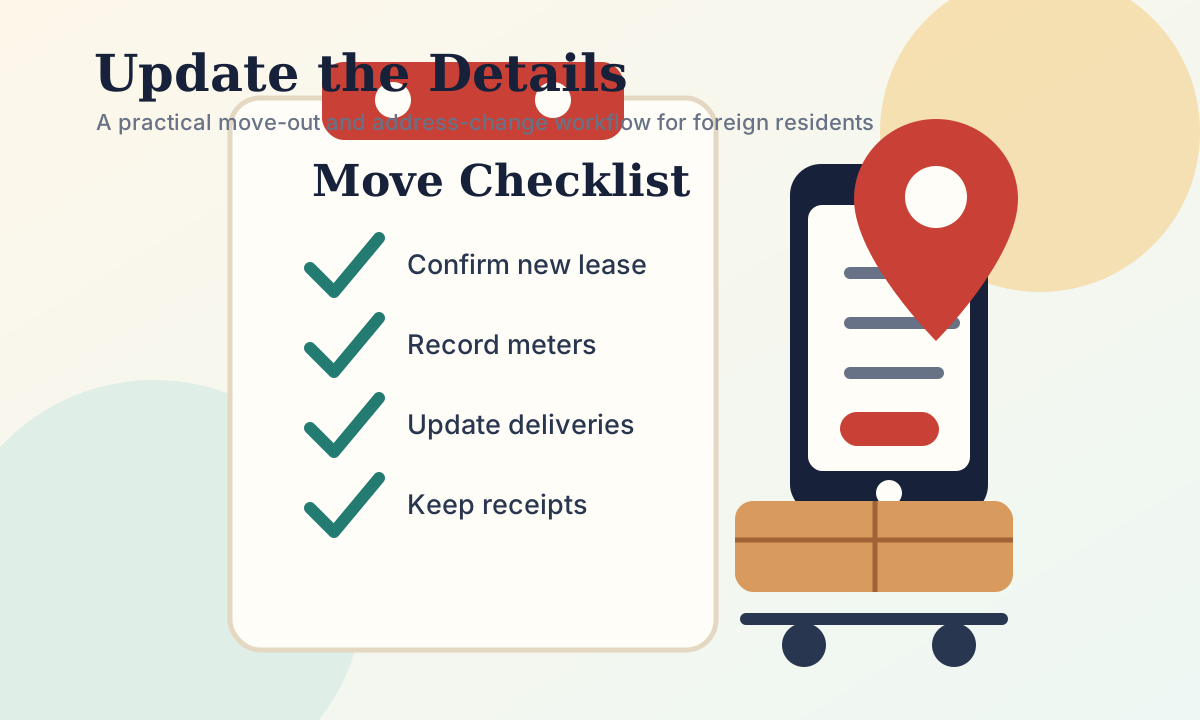
Practical move checklist
- I confirmed both old and new lease dates.
- I documented the old apartment and final meters.
- I agreed on deposit deductions in writing.
- I kept utility and property-fee receipts.
- I updated delivery, employer, banking, and family-service addresses.
- I asked locally about post-move registration.
- I saved new property-management and landlord contacts.
- I photographed the new apartment before full unpacking.
Official sources
- State Council: A Guide to Working and Living in China as Business Expatriates
- Ministry of Commerce: Guide for Business Expatriates
Frequently asked questions
Common questions
What should foreigners do before moving apartments in China?
Before moving, foreign residents should confirm the new lease, document the old apartment, record utility meters, settle property and internet fees, arrange movers, update delivery addresses, and ask locally about post-move registration requirements.
Do foreigners need to register again after changing apartments in China?
Foreign residents should not assume the old address record remains sufficient. Ask the landlord, employer, property manager, or local police station how accommodation or residence registration applies after moving to the new address.
How can I protect my rental deposit when moving out in China?
Keep the lease, payment receipts, move-in photos, repair messages, meter readings, and a signed handover record. Try to agree on deductions in writing and avoid returning keys before the handover condition is recorded.
Which addresses should I update after moving in China?
Update delivery apps, food delivery apps, bank records where relevant, employer HR records, insurance, school or family services, visa or work-permit support contacts, utility accounts, and any subscription or official-mail address.
Should I close utilities before or after moving?
Confirm the handover sequence with the landlord and property manager. In many cases you need final meter readings, fee settlement, and written confirmation before the deposit is returned or the new tenant takes over.